Visual Design is Thinking
CRAFT AS CREDIBILITY IN THE ERA OF AI SLOP
AI slop now floods the internet in text, images, and video. Impact communicators aren’t immune. People believe AI can do everything faster and cheaper. But, if you are looking to communicate complex and nuanced subjects, like sustainability and impact, the way you present that information matters. Visual design shouldn’t be decoration.
It’s thinking made visible.
Design and visual thinking are the clearest signals of credibility you have. AI tools produce based on what’s already out there, which means visual sameness and generic presentation. At its worst, AI slop. Sustainability communicators are already guarding against greenwashing accusations. Substance and visual care travel together, so if your imagery looks like generic and careless, you’ve given people another reason to doubt the rest.
HIGHLIGHTS
- Visual design is interpretation, not generation.
- Sustainability concepts like value chains, circular systems, materiality, and governance models need visual translation.
- Stakeholders read your visuals alongside your claims.
What Good Visual Design Does
Companies invest in brand systems and visual design. Applying that design thoughtfully has benefits.
VISUAL DESIGN:
Makes the work feel important and intentional. Professional, intentional materials read differently than a hodgepodge of disconnected documents. It shows you respect the content.
Creates recognition and consistency. Well-designed materials are immediately recognizable as yours and reinforce your brand.
Improves usability across audiences. Visual design helps each audience engage with the material at the right level, whether they are internal, external, highly technical, or more visually oriented.
Supports communication, not just aesthetics. Good design helps explain why the work matters — improving accessibility, credibility, and engagement.
What AI Does Well, and Where It Stops
There’s a clear line between using AI to think alongside you and asking it to do the thinking for you. That line shows up clearly in visual design. Relying on tired visual clichés,“what everyone else does,” or unbranded generic solutions, undermines your credibility.
We’re not anti-AI. We use AI tools regularly. They help with research synthesis, early-draft writing, brainstorming visual approaches, and generating reference images. AI accelerates exploration, opens up possibilities, and gets us unstuck. The tools are improving weekly, and we’re not the definitive source on everything they can do.
Visual Design Is Thinking, Not Decoration
In sustainability communications, your visual design expresses meaning, enhances storytelling, and adapts your brand to specific topics and audiences. Good visual design requires understanding your strategy, your operations, your stakeholders, and your brand voice, and applying judgment to all of them at once.
Consider a value chain illustration, circularity diagram, or operating model infographic. These are complex, organization-specific visuals anchoring most sustainability communications. Infographics are the heart of visual communication, but also where AI’s limits show up most clearly.
Here are a few good examples of infographics tied to key concepts:


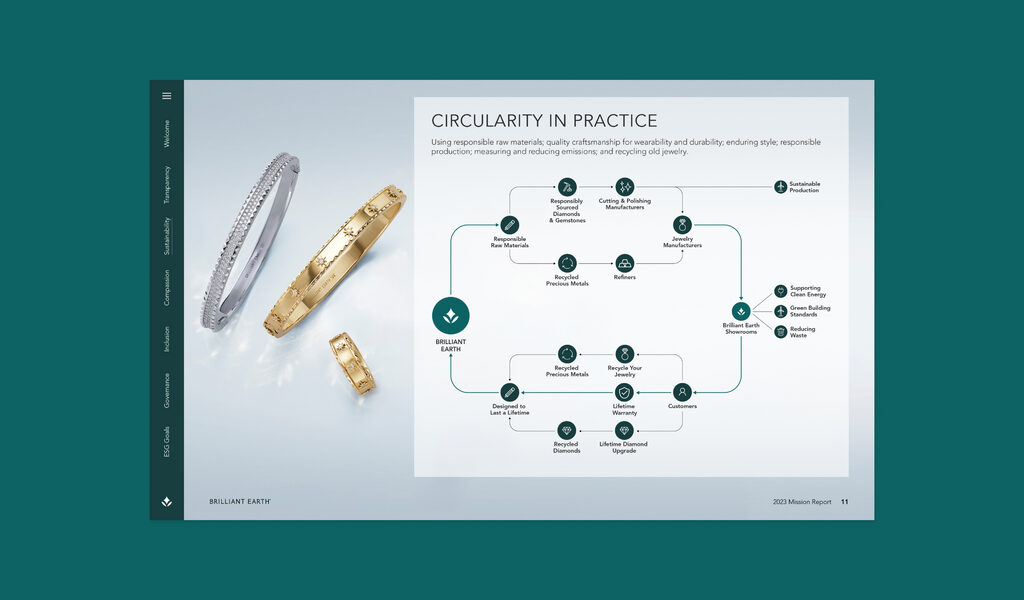
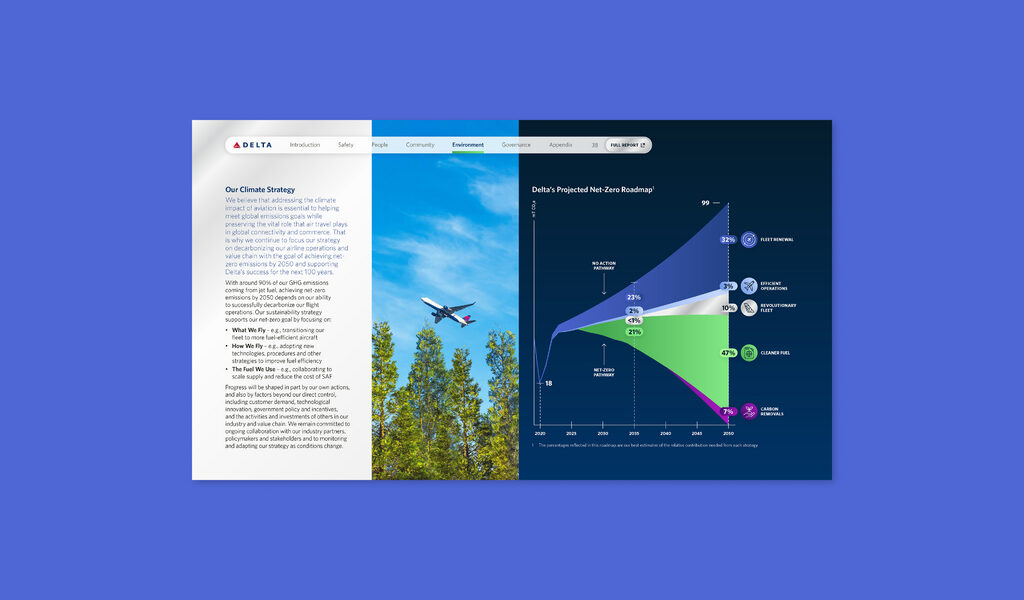
AI can be a help to get started, but it can’t be a visual thought partner in making it yours. (More on what makes infographics actually work: Infographics Make Your Sustainability Story Stick.)
Producing multi-page layouts through a multi-stakeholder review process, for PDFs or websites, is a complex, ongoing problem-solving assignment. Your story is told best in collaboration with people who understand your company, your brand, your stakeholders, and your market context.
The Craft of Visual Design as a Credibility Signal
We’re all are getting better at spotting slop, and that instinct is becoming a fast filter for trust. When things feel off, generic, or just unrelated to the content, the natural question is: did they care about this? And then: is it true? or worth reading?
Where credibility is the whole point, that filter is unforgiving. Substance and visual care signal the same thing: this organization is paying attention. It’s a little like showing up to speak at a black-tie dinner wearing a hoodie. You might be brilliant, but you have to work twice as hard to win over the audience and dispel all they preconceive about what a hoodie means.
AI is a generative tool, not a creative originator. Who directs it makes an enormous difference in the outcome. Not just a “human in the loop” but a creative person in the loop. AI is amazing and can be cost-effective, setting aside the environmental concerns of AI use itself. Still, it’s not (yet?) a replacement for a complex, context-aware, thinking human with lived experience and new ideas.
What This Means for Your Next Sustainability Communication, Report, or Website
AI will keep improving, so some of what we’ve described will shift. What won’t shift is the underlying truth: communication that earns trust requires thinking, and thinking shows up in the visual deign and craft of your communications. Think through where AI is best suited to help, and where people, and the visual craft they can bring, still make the difference.
Ideas On Purpose Can Help
We help organizations communicate sustainability and impact work with substance and visual design. Our team combines strategic thinking with design expertise to turn complex concepts into clear, brand-aligned, credible communications. Email us to talk about what’s next.